
Are CS2 case sites legit? How to check the odds on KeyDrop, Hellcase, CSGO.net and others
"Is KeyDrop legit?", "Does CSGO.net scam?", "Where are the case odds?" — thousands of players ask these questions every day. The short answer: almost any case site can be checked in a minute with numbers instead of reviews. This guide explains how case-site economics work, what published odds really tell you, why provably fair is not the same as fair payout, and what the real return of KeyDrop, Hellcase, Farmskins, Skin.club, DatDrop and Clash.gg cases looks like right now.
In short: a fair case site is about numbers, not reviews
Every case site is a business that earns the difference between the opening price and the average value of the drop. So "does the site scam?" is the wrong question. The right one is what share of your money comes back and how honestly that is shown. That share is called return to player (RTP), and it can be computed for any case whose odds are published.
The second point: the site values the drop in its own prices, while you sell skins on the Steam Community Market or on marketplaces. If a site lists a Karambit 30% above market, the return "by site prices" looks great, while the return "in money you actually get" is much worse. We compute both.
How case sites work and where the profit comes from
The mechanics are the same everywhere. The site assembles a list of items, assigns each a chance and sets an opening price. A roll decides which item drops. Then you either sell the drop back to the site for balance or withdraw it to Steam. The site profits from three sources.
- The gap between opening price and expected drop value. If a case costs $5 and the average drop is worth $3.50, the site earns $1.50 per opening regardless of your luck.
- Inflated internal prices. An item "worth" $100 on the site sells for $70 on the market. Selling the drop back gives you balance only, at a rate the site sets itself.
- Withdrawal limits. Mandatory bonus wagering, minimum withdrawal amounts, trade queues, items that are "temporarily unavailable". Each of these lowers the share of money that reaches the player.
None of this makes a site a scam. Official Valve cases work the same way: a key costs $2.49 and the average drop is worth noticeably less (see the official case returns — there is a live table further down). The difference between a fair and an unfair site is transparency: are the odds published, do its prices match the market, and can you actually withdraw a win.
What RTP and profit chance mean
RTP (return to player) is how much comes back on average from every dollar spent. The formula is simple: the sum of (item chance × item price) over all items, divided by the opening price. A 70% return means a $5 case gives you a $3.50 drop on average and you lose $1.50. Over a hundred openings that is minus $150 — not "if you are unlucky", but on average.
Profit chance is the probability that a single drop is worth more than the opening price. For most case-site cases it sits between 5% and 20%: eight or nine openings out of ten end with an item cheaper than the case. Top prize chance is usually measured in hundredths of a percent. We show all three on the check page, and the terms are explained in the glossary.
| Metric | Meaning | Good | Bad |
|---|---|---|---|
| Return (RTP) | Share of money that comes back on average | above 85% | below 65% |
| Profit chance | Probability that the drop beats the case price | above 20% | below 8% |
| Site vs market prices | How much the site inflates drop value | up to 10% | more than 25% |
| Sum of odds | Published odds should add up to 100% | 99–101% | no odds or the sum is off |
Published odds: where to find them and how to read them
Transparent sites show the odds right on the case page — under each item or in an "Odds" tab. KeyDrop shows a percentage under every skin and ticket ranges in its provably-fair block. Hellcase shows odds on the case page and serves them through an API. Farmskins, Skin.club, DatDrop, Clash.gg and CSGORoll publish percentages or ticket ranges too. If the odds are nowhere to be found, that is the first and biggest red flag.
- Add up the odds: the sum should be close to 100%. If you get 60% or 140%, the site is not showing what it uses.
- Look at the share of items cheaper than the opening price: if it is 85–95%, the return is almost certainly low.
- Compare item prices with market prices: a fair site is within 5–10%.
- Check the top prize chance: 0.01% at a $5 case price means the prize drops once per $50,000 of openings on average.
Provably fair is not the same as fair odds
Almost every case site says "provably fair". It is a cryptographic scheme: the site publishes a hash of its server seed in advance, you add a client seed, and after the roll you can verify that the result was not altered after the fact. Useful — but it proves exactly one thing: that a specific roll was not rigged after you pressed the button.
Item odds, item prices and the opening price are all set by the site. A provably-fair site with a 55% return will honestly prove that you honestly lost. So look at the return first; provably fair is a nice extra, not a guarantee.
Live check: case returns on popular sites
Below are real results from our checker for cases on six popular sites. The numbers use the odds published by each site and current market prices, refresh automatically and may differ from an hour ago: sites change case contents and the market moves. Click a row to open the full report with the case contents and a scenario for your budget.
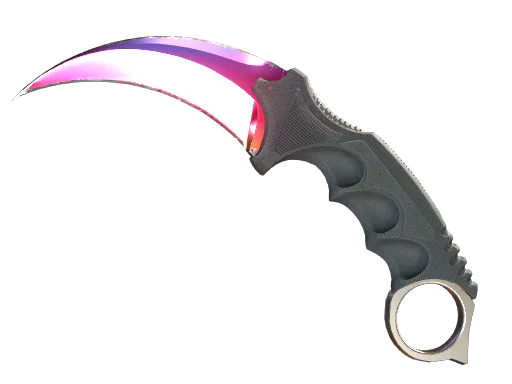
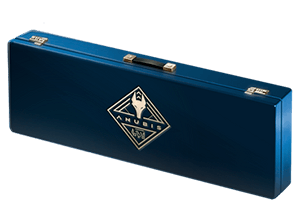 Anubis €1.74 57% veröffentlicht Dfarmskins.com
  M4A4 & M4A1-S €4.35 75% veröffentlicht Cskin.club Chromatic Glitch €1.46 75% veröffentlicht Cdatdrop.com
 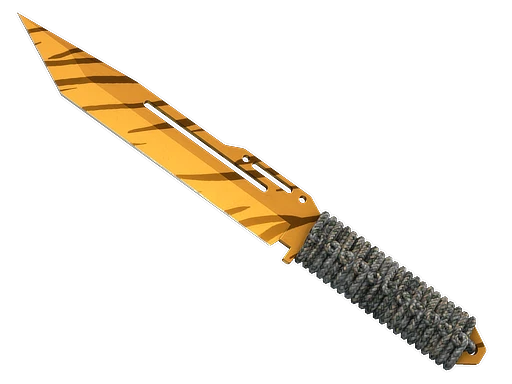 Striped €48.79 61% veröffentlicht Eclash.gg
  Wealth €29 714.82 84% veröffentlicht C
The grade from A to F depends on the return by market prices: A is above 90%, F is below 60%. Note how much cases on the same site differ: cheap "starter" cases are often more generous than expensive ones, and cases built around a single huge prize almost always get a low grade because of the tiny chance.
How to check the odds yourself in two minutes
- 1 Open the case on the site and copy the link
You need the link to a specific case page, for example
key-drop.com/en/skins/category/explosionorhellcase.com/open/anubis, not the site home page. - 2 Paste the link into the checker
On the case-site check page paste the link and set a budget — the amount you are ready to spend. The checker finds the item list and the odds on its own.
- 3 Read the return, the profit chance and the grade
A return above 85% and a profit chance above 20% is a normal case. A return below 65% means you are overpaying for the thrill. The gap between "return by site prices" and "by market prices" shows how much the site inflates drop values.
- 4 Check the scenario for your budget
The budget block shows the median balance after a series of openings and how many openings it usually takes to run dry. It is the most honest number of all: it accounts for odds, prices and variance.
Paste a case link from any site — return, profit chance and grade in a few seconds.
Check a caseRed flags of a case site
- No odds on the case page or in the rules. A site that hides its odds hides them for a reason.
- Item prices well above the market. A "$120" drop turns into $80 the moment you try to sell it.
- Promo codes and "free cases" everywhere. Bonuses almost always come with wagering: you can withdraw only after turning over several times the bonus amount.
- A "wins" feed made of knives only. A real drop feed is 90% cheap items.
- The domain is a few weeks old. The checker shows domain age; fly-by-night sites rarely live long enough to pay out.
- Withdrawals only through a queue, a "temporary delay" or after buying one more case.
- You cannot open a case without granting full inventory access. Standard Steam OpenID sign-in is enough; a site does not need access to your inventory.
Official cases versus case sites
The fair baseline is official CS2 cases. Their odds are known exactly: Valve disclosed them in 2017 at the request of the Chinese regulator and they have not changed since — 79.92% for Mil-Spec, 15.98% for Restricted, 3.2% for Classified, 0.64% for Covert and 0.26% for a knife or gloves. Below are the official cases with the best return at current key and item prices.


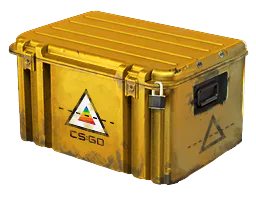
Even official cases rarely return more than 60–70% of what you put in: Valve earns on keys, not on cases. In exchange any drop can be sold on the Steam Market immediately and the odds and contents are known in advance. You can try it without money in the case opening simulator — same math, same odds.
KeyDrop, Hellcase, CSGO.net: what the numbers say
KeyDrop
KeyDrop publishes odds under every item and ticket ranges in its provably-fair block, so its cases are fully checkable. Returns vary a lot from case to case: some cases return more than 80% by market prices, cases built around one expensive prize return noticeably less. KeyDrop shows item prices in its own currency and we convert them to dollars at the site rate. Bottom line: there is no "overall KeyDrop fairness" — check the specific case you are about to open.
Hellcase
Hellcase shows the odds of every item on the case page and through a public API, has been around since 2016 and runs provably fair. Its internal prices are usually close to market, so the "return by site prices" and "by market prices" differ less than on many competitors. As everywhere, cheap $1–3 cases are often more generous than expensive ones.
CSGO.net
CSGO.net shows odds on the case page, but the data arrives over a live connection rather than a regular page. Our checker handles that: paste a CSGO.net case link and the check runs in your browser, with the same report as for any other site. Pay attention to the internal rate: CSGO.net item prices are set in its own units.
Farmskins, Skin.club, DatDrop, Clash.gg, CSGORoll
All five publish odds and all five are checked automatically — current grades are in the table above. Farmskins and DatDrop show percentages next to items, Skin.club and Clash.gg show ticket ranges, CSGORoll shows percentages in its own currency at a rate the site sets. Compare specific cases rather than sites: the spread between cases on one site is usually larger than the spread between sites.
Fragen und Antworten
Is KeyDrop legit?
KeyDrop publishes the odds for every case, so it can be checked with numbers. Returns differ a lot between cases: check the specific case in the checker before opening. KeyDrop provably fair confirms the roll is honest, not the size of the return.
Is CSGO.net legit?
CSGO.net shows odds on the case page. Paste a case link into our checker — the check runs in the browser and shows the return by market prices, the profit chance and a grade from A to F.
Where can I see the odds of a case?
On the case page under the items or in an "Odds" / "Provably fair" tab. If the odds are nowhere to be found, do not open the case: the site is hiding the most important thing.
Can you make money on case sites?
On average, no. The return of almost every case is below 100%, so the site wins over a long run. Individual openings can be profitable, but the profit chance of most cases is 5–20%.
Official cases or case sites — which is better?
Official cases have exactly known odds and the drop can be sold on Steam right away. Their return is below 100% too, but there is no payout risk. Case sites sometimes offer cases with a higher return, but every case needs to be checked.
Why do sites hand out promo codes and free cases?
A bonus is almost always tied to wagering: you can withdraw only after turning over several times the bonus amount. It is a way to attract a deposit, not a gift.